
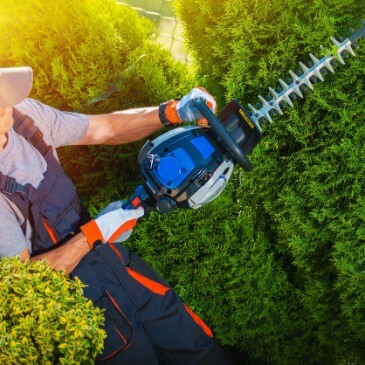
Pruning Done Right Transforms Your Landscape
Bad pruning kills shrubs, kills curb appeal, and wastes money on plants that never recover. Real pruning, done at the right time with the right technique for the right plant, makes shrubs look better, live longer, and require less from you. We understand plant biology and timing. Most homeowners and lawn services do not. It shows.
Why Professional Pruning Actually Matters
Most homeowners approach shrub pruning like yard work. Just hack it back and move on. That is exactly why most properties look neglected by summer. Bad pruning kills the natural shape of plants, encourages weak growth, and turns a landscape asset into an eyesore.
A shrub that gets pruned properly every year looks better, lives longer, and requires less intervention. A shrub that gets hacked randomly every few years gets progressively worse. You can tell the difference just by looking.

Assessment First
Every shrub evaluated for species, age, health, shape, and your goals before a single cut is made.
Species-Specific Technique
A boxwood is pruned completely differently than an azalea. We know the correct approach for each plant species.
Health-First Philosophy
Dead wood removed, dense areas opened for air circulation, and crossing branches eliminated to extend plant life.
Strategic Shaping
Once health is handled, we shape with intention. Natural, flowing forms or tight geometric hedges, matched to your vision.
Why DIY Pruning Usually Fails
Pruning looks simple from the outside. Grab the shears, cut it back, move on. But there are real reasons most DIY pruning makes things worse instead of better.
Types of Pruning We Provide
Not all pruning is the same. The right approach depends on the plant’s species, age, condition, and your goals. Here are the five types of pruning we provide, each suited to a different situation.
Maintenance Pruning (Annual)
Standard work that keeps healthy shrubs looking their best. Light pruning to maintain shape, remove awkward growth, and encourage desired density. Most shrubs get this once per year in late winter or early spring.
Frequency: Once per year
Best for: Healthy, well-shaped shrubs that just need upkeep
Rejuvenation Pruning (Every 3-5 Years)
Deeper pruning that opens up the interior and encourages fresh growth. It looks dramatic when we do it, but it revitalizes overgrown plants and restores their form. This is how you reset a shrub that has gotten too dense or leggy.
Frequency: Every 3-5 years
Best for: Overgrown or dense shrubs that need a reset
Renewal Pruning (For Aging Plants)
An old shrub that is getting sparse and weak sometimes needs cutting back to 6-12 inches from the ground. This looks severe, but it triggers vigorous new growth from the base. We only do this on species that respond well to it, and only when other options have been exhausted.
Frequency: Once, when needed
Best for: Aging, sparse shrubs that can tolerate hard cuts (lilacs, spirea, forsythia)
Formal Shaping (Hedges & Topiary)
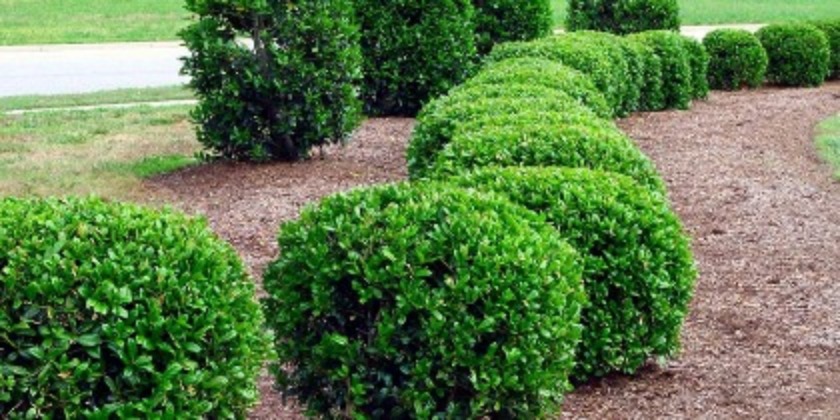
Precise pruning for formal hedges or specific geometric shapes. Usually requires 1-3 visits per year depending on growth rate and how tight you want the look. This is the most labor-intensive style of pruning, but the results are striking.
Frequency: 1-3 times per year
Best for: Boxwood hedges, privacy screens, geometric foundation plantings
Specimen Pruning (Focal Plants)
Special plants that serve as focal points get specialized treatment. We may open up interior branching, selectively thin to create artistic forms, or maintain shapes that complement your home’s architecture. This is pruning as craft, not just maintenance.
Frequency: 1-2 times per year
Best for: Japanese maples, ornamental trees, statement plantings
Seasonal Timing in Missouri
Common Missouri Shrubs & How We Handle Them
Health Signs & Problem Detection
We are trained to spot problems that develop before homeowners notice them. Catching these early during pruning can save plants that would otherwise decline.
An Investment in Your Landscape’s Future
Think of professional pruning as an investment. A $200 annual pruning maintains your shrub’s health and appearance, preventing the $500-1,000 problems down the road. A shrub that gets proper care for 10-15 years looks better and costs less than one that is neglected and then requires expensive restoration. Beautiful shrubs increase curb appeal and add value to your property.
Pair With Related Services
Shrub pruning pairs naturally with our other landscape services:
What Our Customers Say
5-Star Rated on Google. Here’s Why.
Service Areas
We provide professional shrub pruning across three regions in Missouri:
Phelps County: Rolla, St. James
Pulaski County: St. Robert, Waynesville
St. Louis West County: Ballwin, Chesterfield, Clarkson Valley, Creve Coeur, Des Peres, Ellisville, Ladue, Manchester, St. Charles, Town and Country, Twin Oaks, Valley Park, Wildwood, Winchester